The proxymint blog
Detection research, measured on live exits, and straight answers on mobile, ISP, residential and datacenter proxies.

Python requests proxy: auth, sessions, SOCKS5 and rotation
Set a proxy in Python requests the right way: the proxies dict and its https key, auth encoding, sessions, SOCKS5, rotation, retries and the silent bypass.New to proxies? Start here
6 reads in order, 67 minutes in all: from what a proxy is to what a site sees when you use one.
All articles
61 articles
 Comparisons
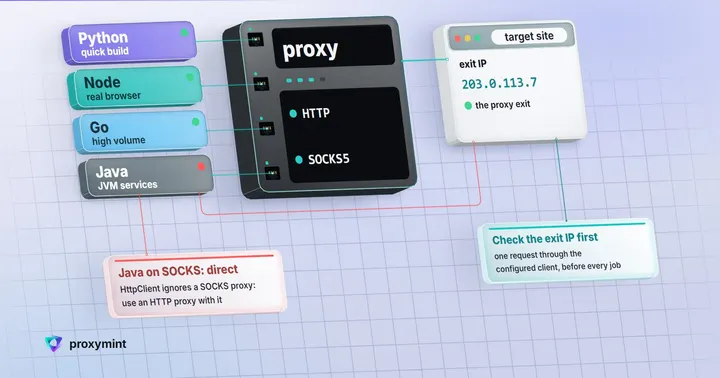
Best language for web scraping: Python, Node, Go and Java compared
Python, Node, Go and Java compared for scraping by parsing tools, concurrency, headless browsers and proxy support, with a verified proxy snippet for each.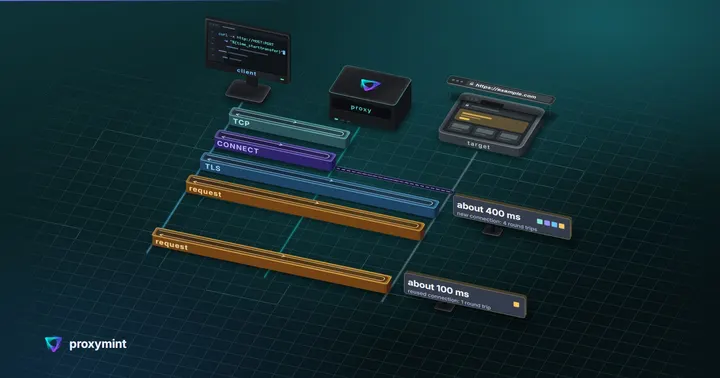 Best Practices
Proxy performance tuning: concurrency, reuse and timeouts
Proxy performance is mostly decided on the client. Tune connection reuse, concurrency and timeouts in order, then measure each phase with curl.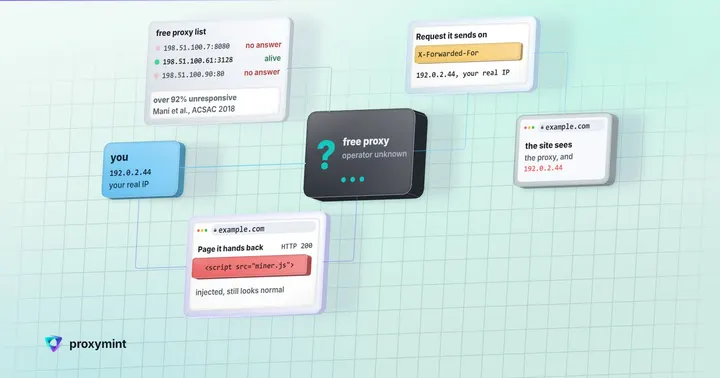 Guides
Are free proxies safe? What a free list actually delivers
What studies of free proxy lists found: dead proxies, leaked IPs, injected scripts and swapped certificates, what HTTPS hides, and when free is fine.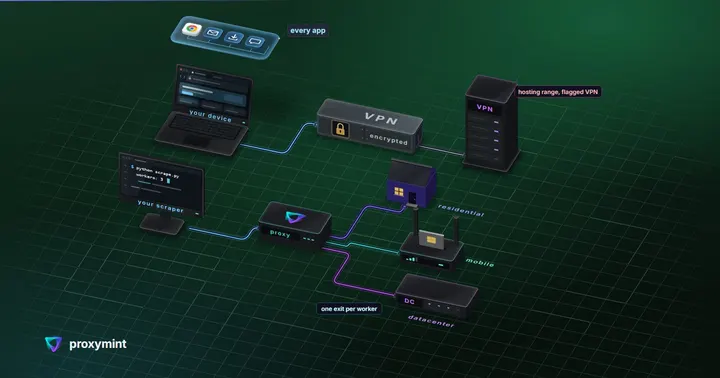 Comparisons
Proxy vs VPN: the difference, and which job needs which
Proxy vs VPN compared on scope, encryption, speed and detection: which jobs need a VPN, which need a proxy, and when to run both together.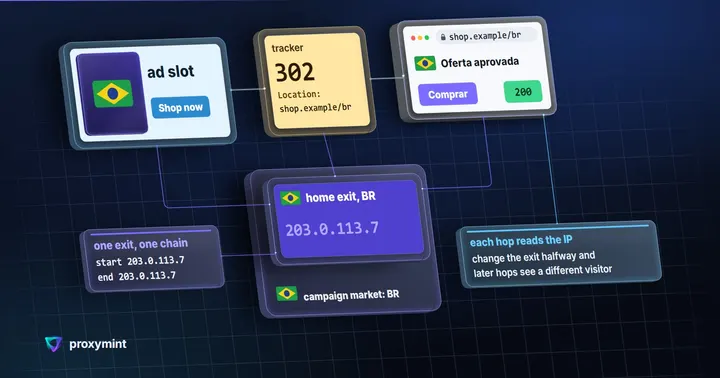 Guides
Ad verification proxies: checking ads market by market
How to verify ad placements, creatives and landing redirect chains per market from a consumer origin, which proxy tier fits, and how to size a setup.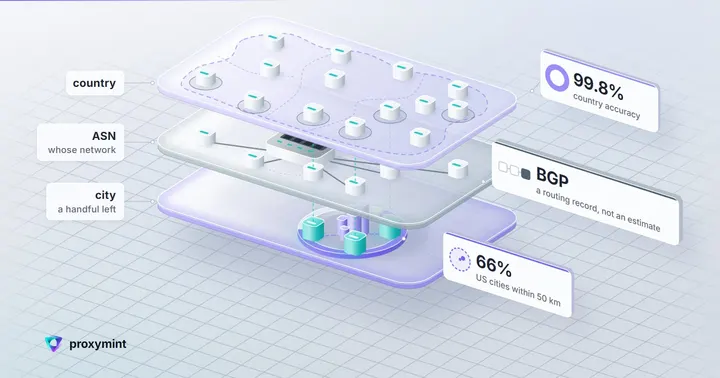 Best Practices
ASN targeting vs geo targeting: what each one selects
ASN targeting vs geo targeting: one picks the network behind an IP, the other its place. When each matters, and how to verify an exit's ASN and location.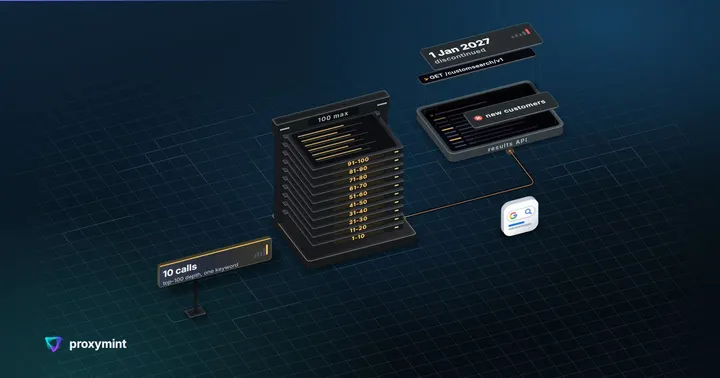 Guides
Scrape Google search results: API, parsing, pacing
How to scrape Google search results in 2026: the Custom Search JSON API and its limits, what Google's terms say, parsing, pacing and setting location.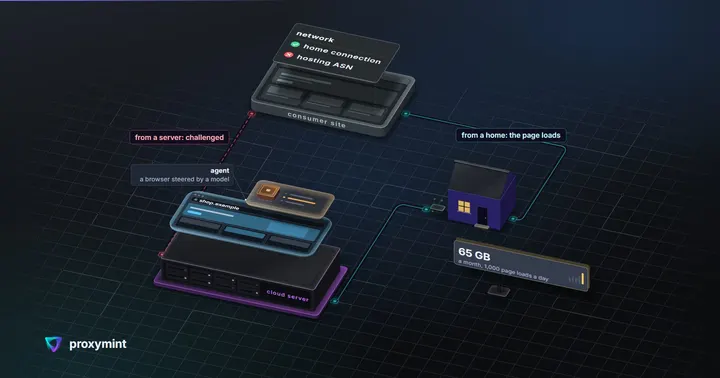 Guides
Proxies for AI agents: giving an agent reliable web access
Proxies for AI agents give a cloud-hosted agent a home or ISP origin. Which jobs need one, which type and rotation fit, and how to wire Playwright and MCP.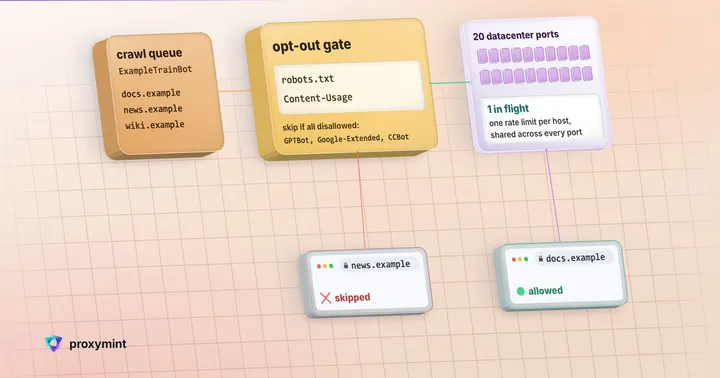 Guides
Proxies for AI training data: throughput, sizing and rules
How to size proxies for AI training data: why datacenter ports carry most of the crawl, where residential fits, opt-out rules and a sized 10M page job.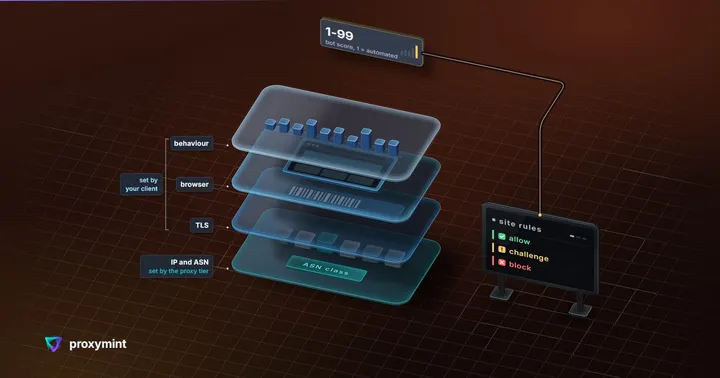 Guides
How anti-bot systems work, and where a proxy tier fits
How anti-bot systems work, from vendor docs: IP reputation, TLS fingerprints, browser checks and behaviour feed one score, then a policy picks the challenge.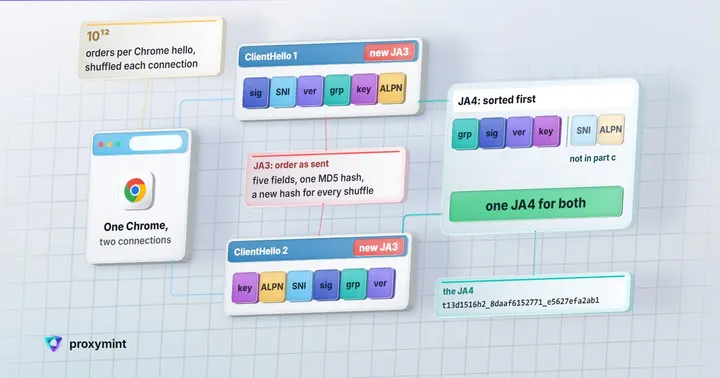 Comparisons
JA3 vs JA4 TLS fingerprinting, and what a proxy changes
JA3 vs JA4 TLS fingerprints compared field by field: why Chrome's extension shuffle broke JA3, how JA4 stays stable, and what a proxy changes.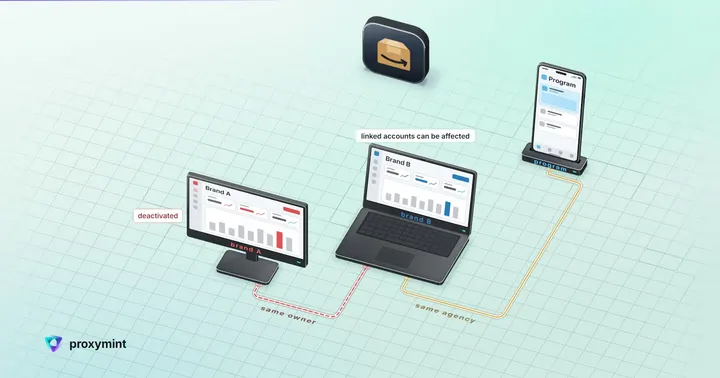 Guides
Multiple Amazon seller accounts: what Amazon allows and how
Amazon allows extra seller accounts only for a legitimate business need. What counts, what each account needs, how teams log in, and where a static IP fits.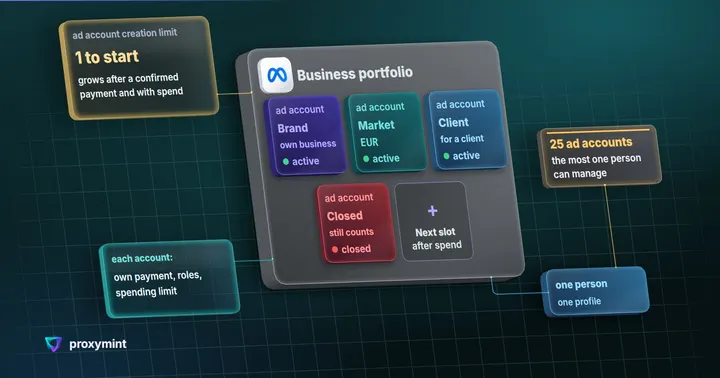 Guides
Multiple Facebook ad accounts: Meta's limits and setup
Meta allows several ad accounts in one business portfolio. The real limits, roles, agency access and spend controls, and where a steady login IP helps a team.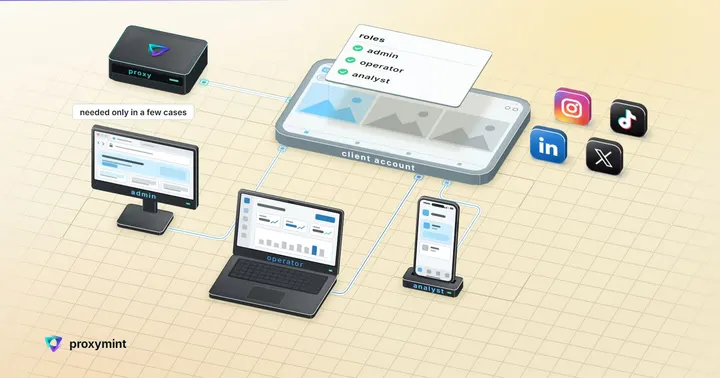 Guides
Proxies for social media management: one client, one origin
Proxies for social media management, inside the rules: when Meta, TikTok and LinkedIn access tools do the job, and when one origin per client helps.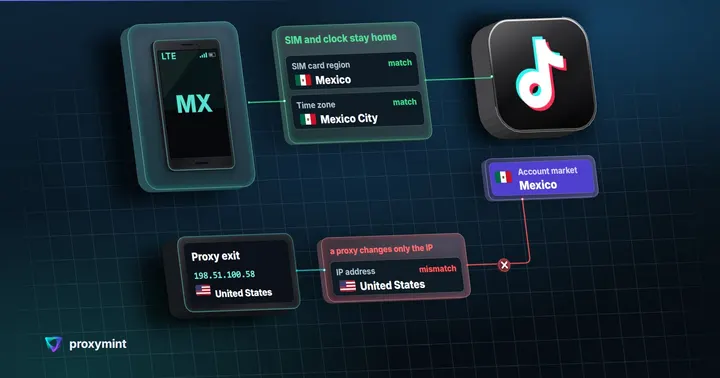 Guides
TikTok proxies: regional research and brand accounts
TikTok proxies for brands and agencies: what TikTok's rules allow, how to see what each market is shown, and how to run accounts you own from one origin.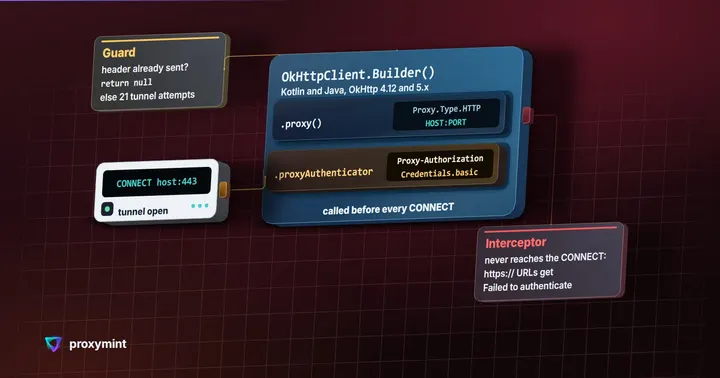 Guides
OkHttp proxy: auth, SOCKS5, rotation and 407 fixes
OkHttp proxy setup in Kotlin and Java for OkHttp 4.12 and 5.x: proxyAuthenticator done right, SOCKS5 logins, the system proxy, rotation and the 407 traps.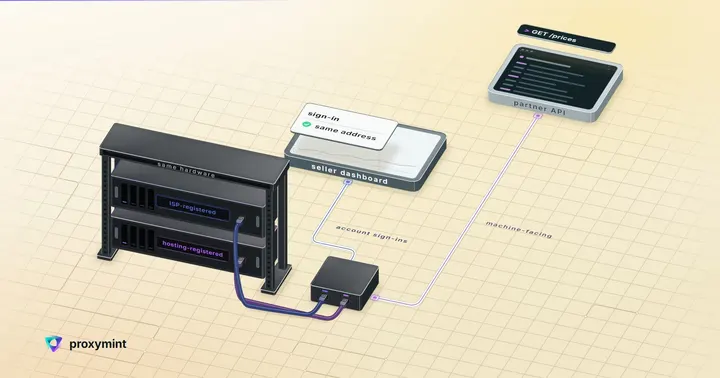 Comparisons
ISP vs datacenter proxies: which job each one fits
ISP vs datacenter proxies: both run on servers and hold one IP for the term. Which job each one fits, how speed compares, and how each is billed.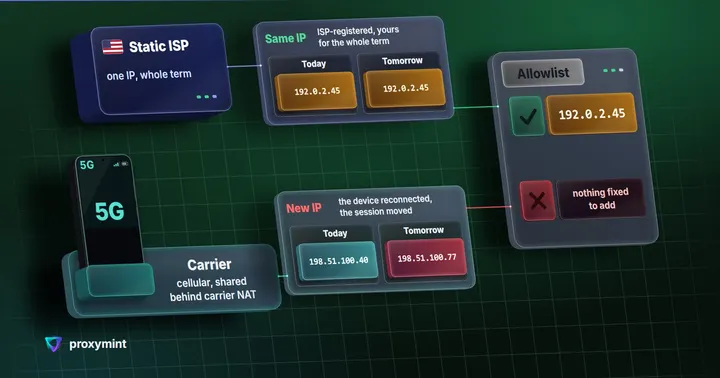 Comparisons
Mobile vs ISP proxies: moving mobile IPs or one fixed address
Mobile vs ISP proxies compared: shared moving IPs vs one fixed IP, detection, speed, and how each billing model fits one managed account.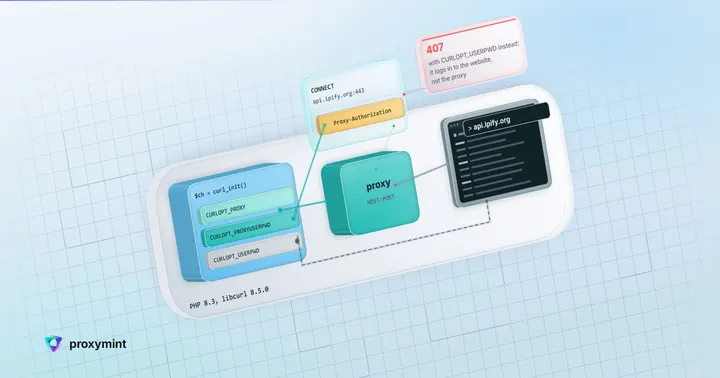 Guides
PHP cURL proxy: CURLOPT_PROXY, auth, SOCKS5 and errors
PHP cURL proxy setup that works: CURLOPT_PROXY and PROXYUSERPWD, special characters, SOCKS5 and socks5h, env variables, reuse, rotation and the 407 errors.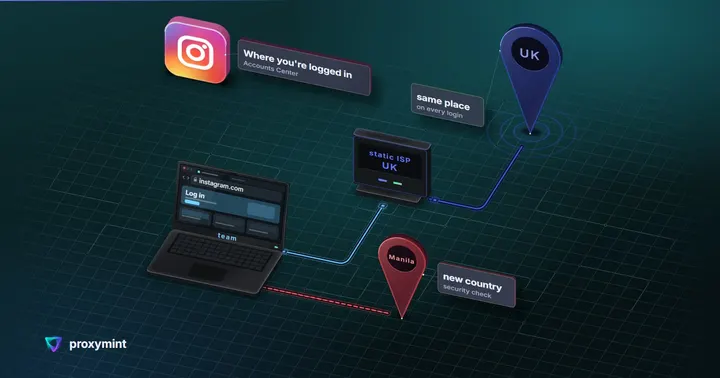 Guides
Instagram proxies for brand and agency account logins
Instagram proxies for brand and agency teams: what Instagram allows, why login location matters, which proxy type fits, billing, and when you need none.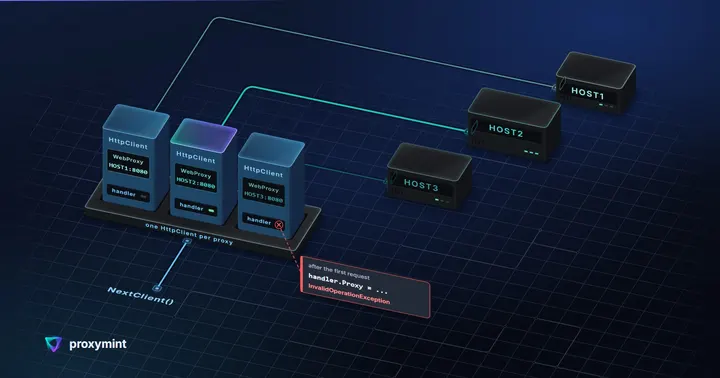 Guides
C# HttpClient proxy: WebProxy, auth, SOCKS5 and rotation
C# HttpClient proxy setup for .NET 8 and 10: WebProxy credentials, SOCKS5, environment proxies, IHttpClientFactory, rotation and the 407 and https:// traps.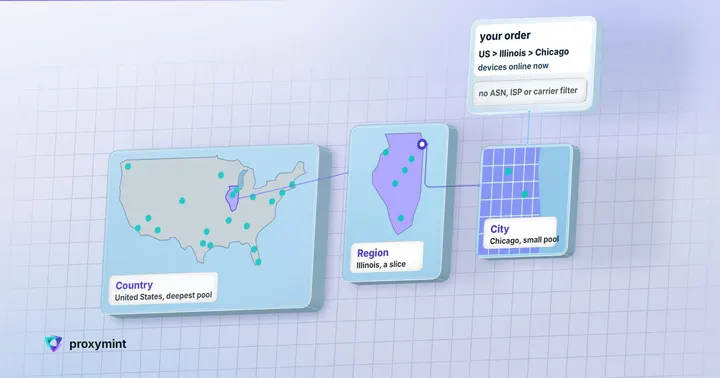 Best Practices
Geo targeted proxies: country, region or city level
Geo targeted proxies filter exits by country, region or city. How accurate each level is, why city pools run thin, and when country targeting is enough.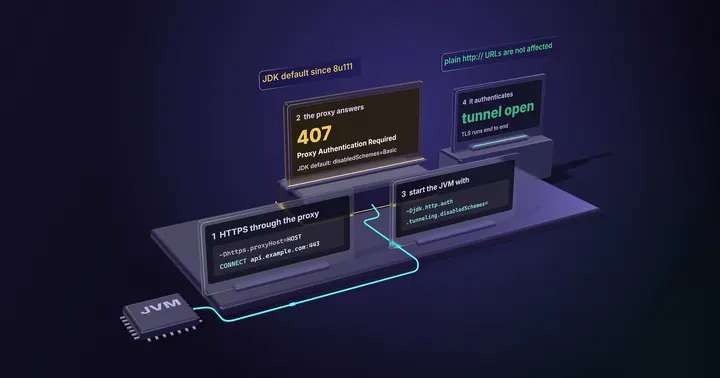 Guides
Java proxy setup: HttpClient, Authenticator and SOCKS5
Java proxy setup that works: system properties, java.net.Proxy, HttpClient, a scoped Authenticator, the 407 fix for Basic over CONNECT, SOCKS5, OkHttp, Apache.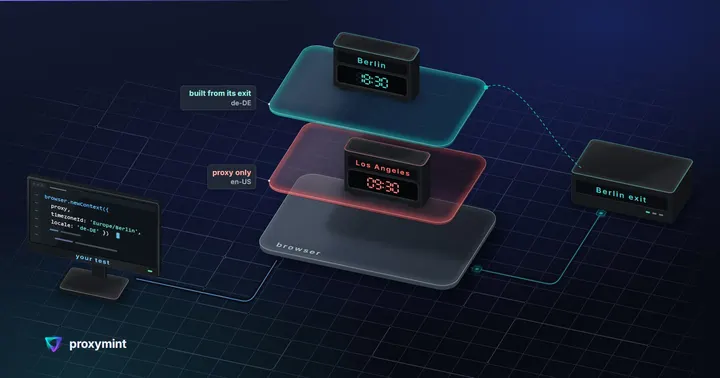 Guides
Playwright proxy setup: scopes, auth, SOCKS5, rotation and timezone
Set a Playwright proxy per browser, per context or in playwright.config. Fix 407 and SOCKS5 auth errors, rotate by context, and set timezone for geo-QA.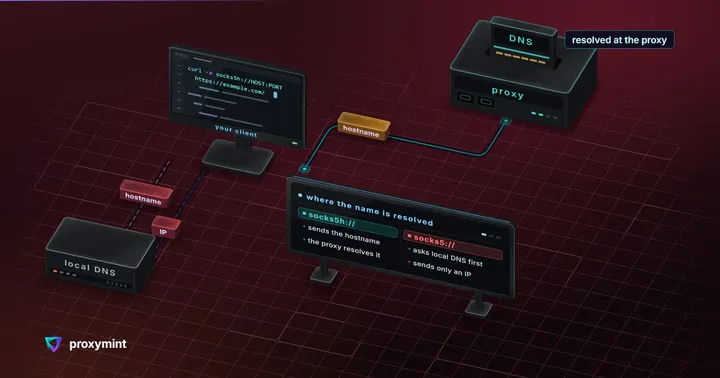 Best Practices
Proxy DNS leak test: check and fix it in your own client
A proxy DNS leak test you run through your own client: where curl, requests, httpx, Playwright and Node resolve names, what a leak exposes, and each fix.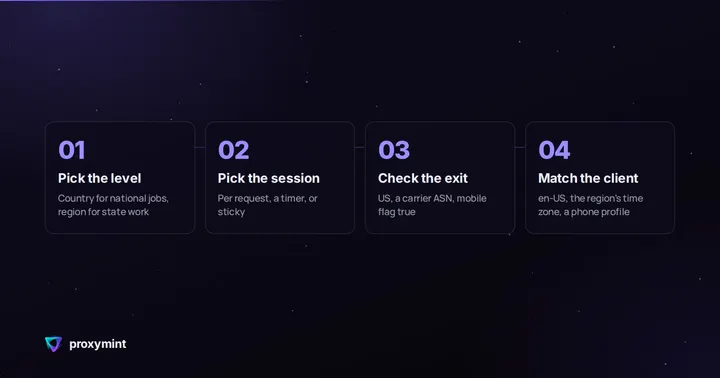 Guides
US mobile proxies: carriers, targeting and exit checks
US mobile proxies exit through US carrier networks. How CGNAT and the three national carriers shape them, how precise targeting is, and how to check the exit.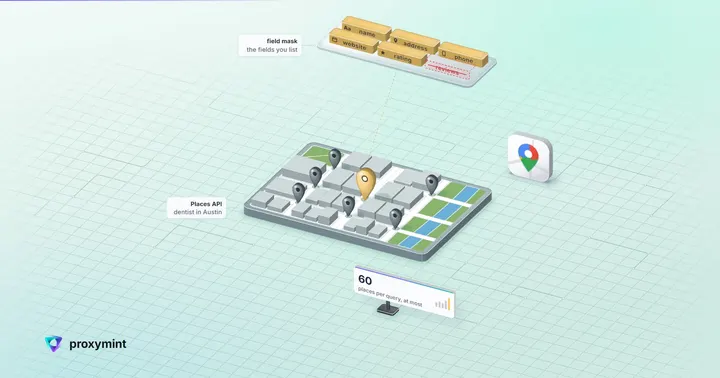 Guides
How to scrape Google Maps: Places API first, then scraping
How to scrape Google Maps: how the Places API is billed now, what Google's terms allow, and a scraping method for public business data with city-level proxies. Guides
USA datacenter proxies: which US targets accept them
USA datacenter proxies are fast US server IPs. Which US targets accept hosting networks, which filter them, how to test one exit and when another tier fits.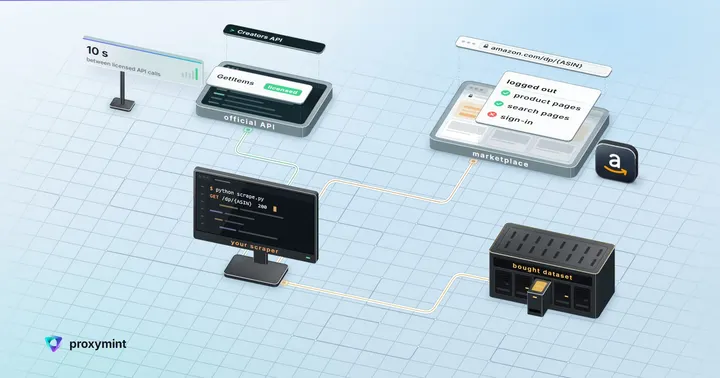 Guides
How to scrape Amazon: Python, the law and official APIs
Scrape public Amazon product and price data with Python: what the terms and courts say, the official API routes, polite rate limits and where proxies fit.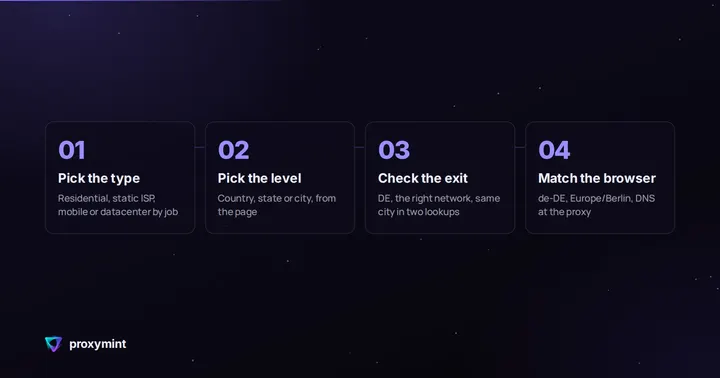 Guides
Germany proxies: targeting, sessions and exit checks
Germany proxies give a German exit IP. Which proxy type fits, how state and city targeting works, why DE is the code, and how to check the exit before a job.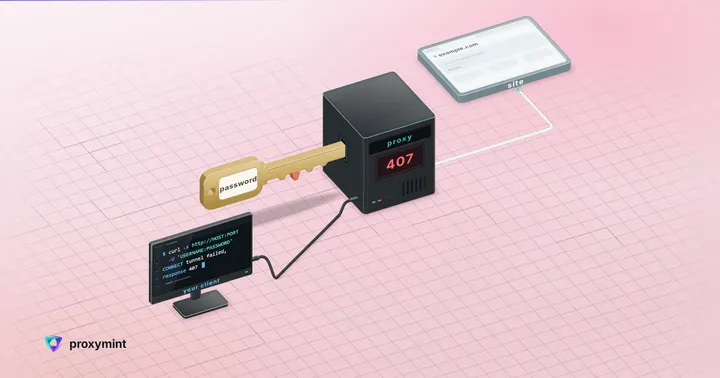 Guides
407 Proxy Authentication Required: causes and client fixes
A 407 means the proxy, not the site, rejected or never got your login. Causes in the order to check, and the fix for curl, Python, Node, browsers and apt.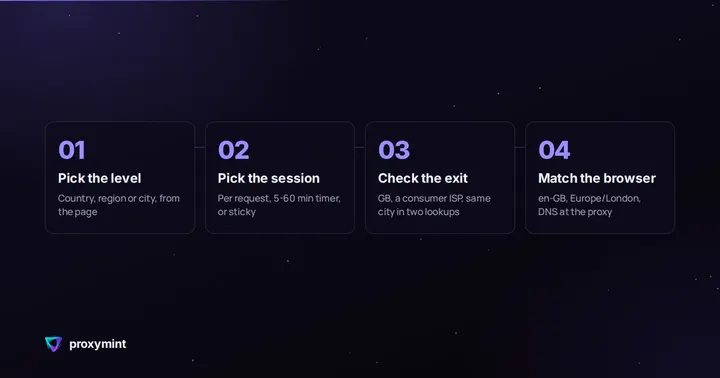 Guides
UK residential proxies: regions, cities and sessions
UK residential proxies route through British home broadband. How UK targeting works, why GB is the country code, which session fits and how to check the exit.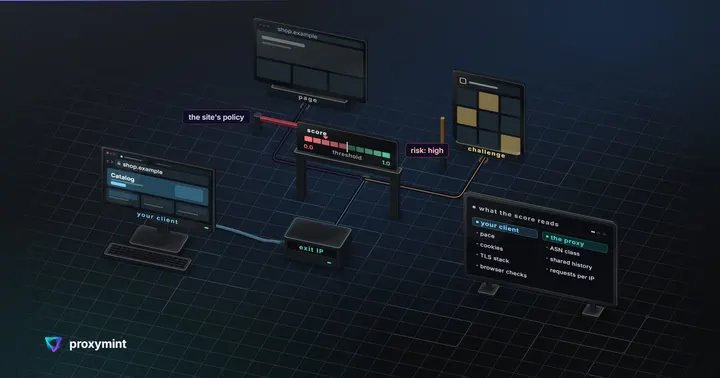 Best Practices
Why proxies trigger captchas, and what reduces them
Why proxies trigger captchas: the risk score behind each challenge, the inputs your proxy tier changes, and what a legitimate client can fix first.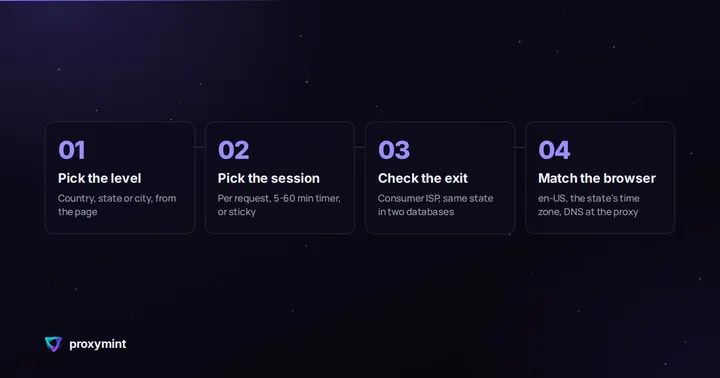 Guides
USA residential proxies: state, city and session guide
USA residential proxies route through US home connections. How state and city targeting works, which session type fits, and how to check the exit.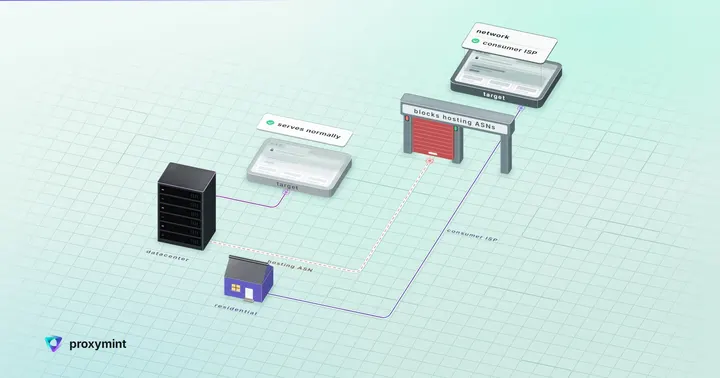 Comparisons
Datacenter vs residential proxies: which fits the target
Datacenter vs residential proxies compared on ASN, speed, location and billing model, with a 100,000-request job sized in GB and a test to pick per target.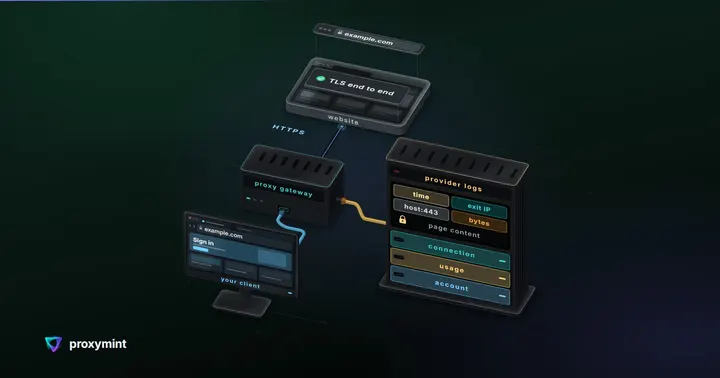 Guides
Do proxy providers keep logs? What they record and why
Do proxy providers keep logs? What a proxy gateway records, what it cannot see over HTTPS, why "no logs" claims failed in court and how to read a policy.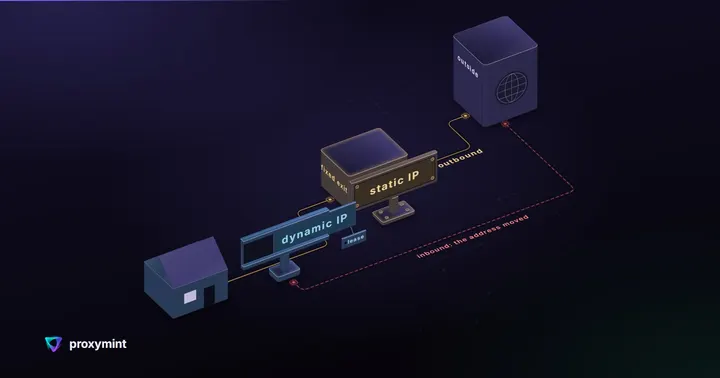 Comparisons
Static vs dynamic IP: the difference and when you need one
Static vs dynamic IP explained: how DHCP leases and ISP renumbering change an address, how to check which you have, and when a fixed IP is worth it.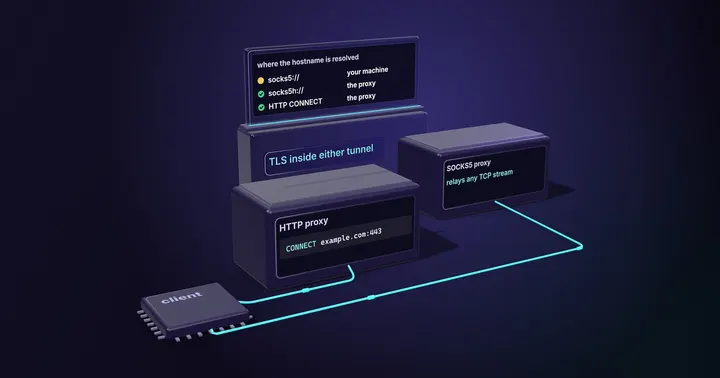 Comparisons
SOCKS5 vs HTTP proxy: DNS, speed, security, which to use
SOCKS5 vs HTTP proxy compared: what each carries, where DNS resolves (socks5 vs socks5h), speed, auth, client support, and which one your job needs.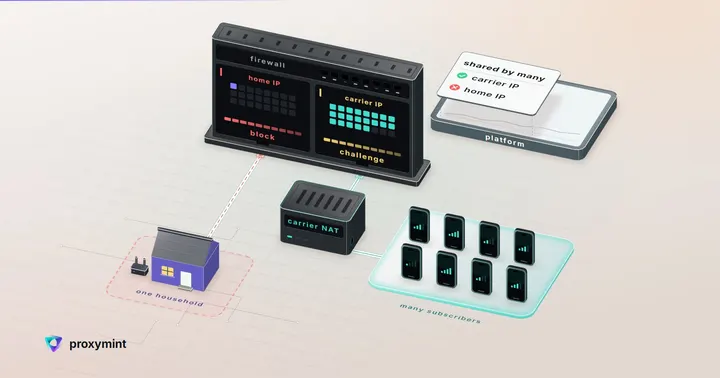 Comparisons
Mobile vs residential proxies: how carrier IPs differ
Mobile vs residential proxies compared: CGNAT and block risk, detection, speed, sessions, what drives traffic, and which workloads fit each type best. Guides
Proxy format: IP, port, username and password, every form
Read and write proxy strings: host:port:user:pass, user:pass@host:port, http:// vs socks5h:// URLs, separate fields, password encoding and IPv6 brackets.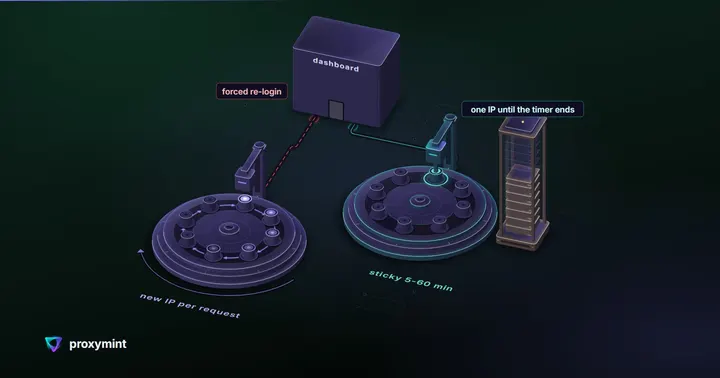 Comparisons
Rotating vs sticky proxies: what breaks under each mode
Rotating vs sticky proxies by job: per-request IPs, 5-60 minute timers or sticky while online, what breaks under the wrong mode, and a test to run.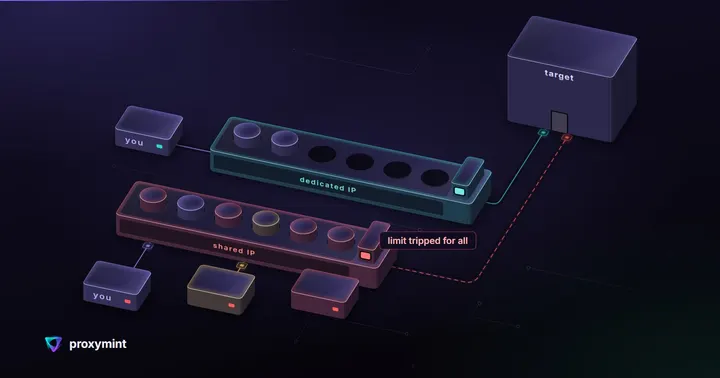 Comparisons
Dedicated vs shared proxies: who else uses your IP
Dedicated vs shared proxies compared: who else sends traffic from your IP, how each is billed, which tiers can be dedicated and when a pool wins.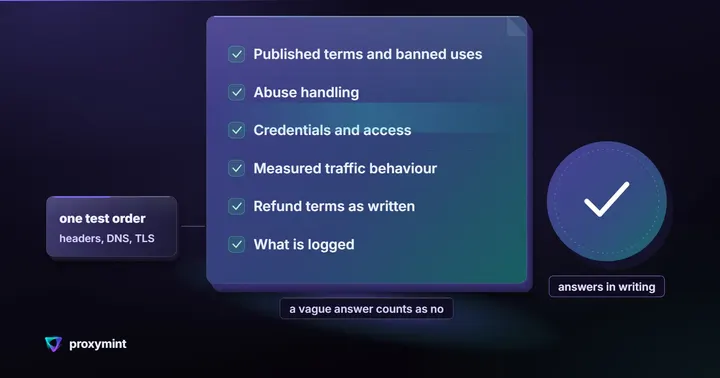 Guides
Proxy provider security review: 6 checks before you buy
A proxy provider security review for privacy-first buyers: terms, abuse handling, credentials, measured traffic, logs, IP sourcing and what certificates prove.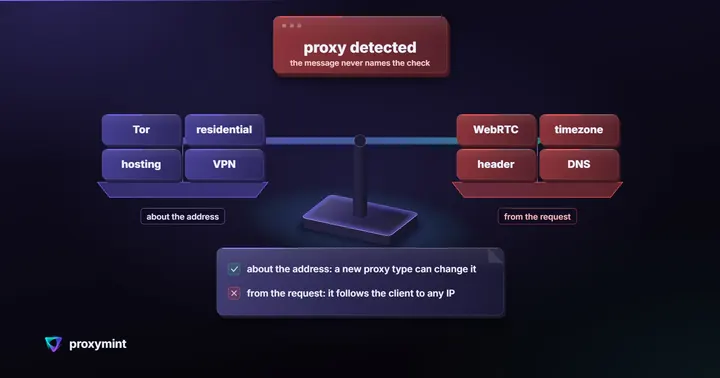 Best Practices
Proxy detected error: what it means and how to fix it
Proxy detected means a site flagged your IP or your client. What each message means, an eight-check triage, and which causes a new proxy tier actually fixes.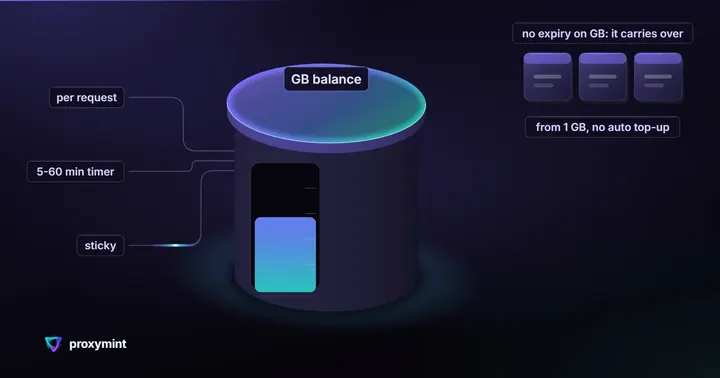 Guides
Pay as you go proxies: per-GB billing, no subscription
Pay as you go proxies bill per GB with no renewal. How to estimate GB, how per-GB rates scale, whether GB expire, and when a per-IP subscription fits better.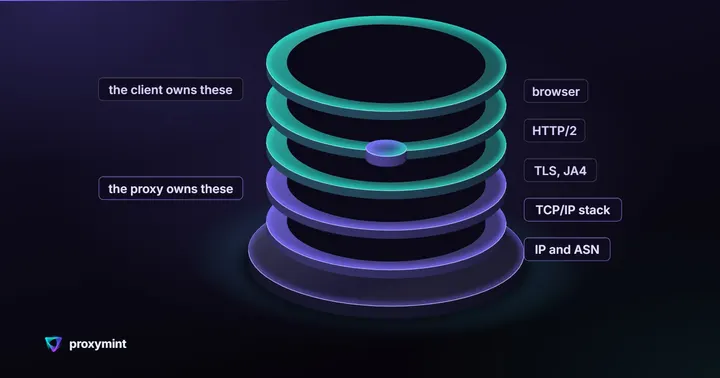 Guides
How do websites detect proxies? Every layer, in order
Websites detect proxies by IP and ASN, TCP stack, TLS, headers, browser leaks and behaviour: what each layer sees, and a self-test you can run.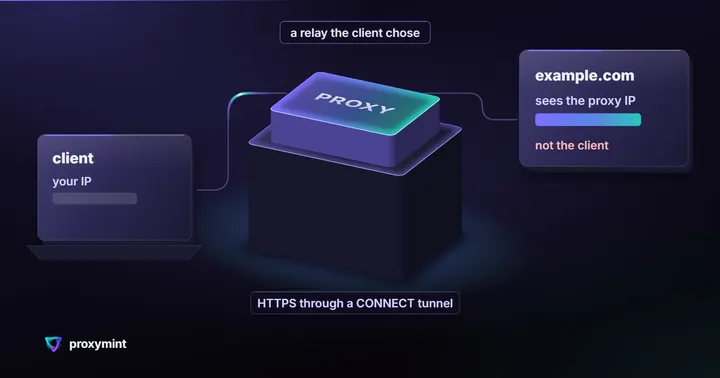 Guides
What is a proxy server? How it works and when to use one
What is a proxy server: how a request travels through one, forward vs reverse, what it hides and what it does not, proxy vs VPN, the risks and what it costs.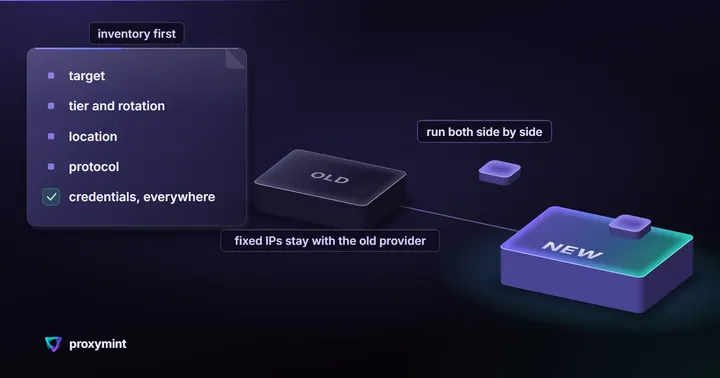 Guides
Switching proxy providers without downtime: a checklist
Switching proxy providers without breaking jobs: what to inventory, how to map credentials and rotation, the parallel test to run, and when switching fails.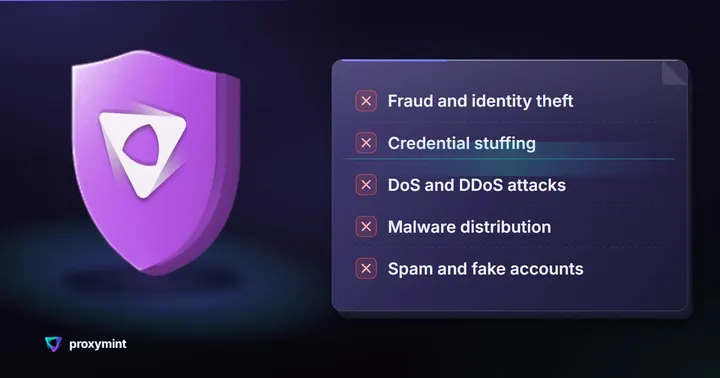 Guides
Proxy acceptable use policy: what providers ban and why
What a proxy acceptable use policy bans, which targets get blocked, how KYC and enforcement work, what a breach costs, and what to read before you pay.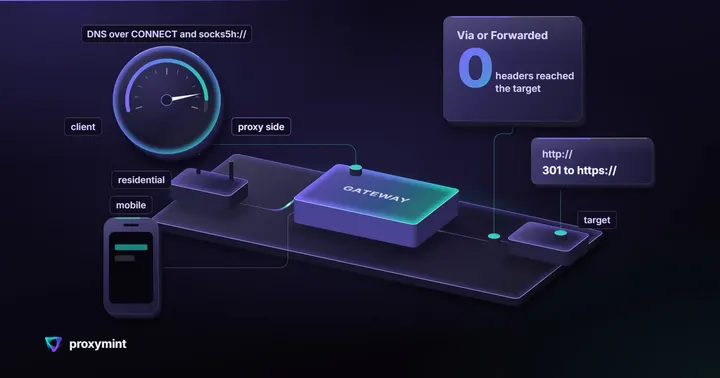 Case Studies
proxymint Lab #1: DNS, headers and redirects on our gateway
Proxy leak test results from our residential and mobile gateway: where DNS resolves per scheme, which forwarding headers arrive, and what plain HTTP gets.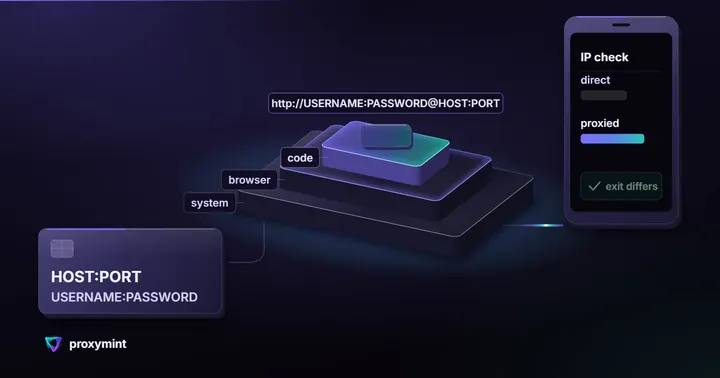 Guides
How to use a proxy: system, browser, phone and code
How to use a proxy on Windows, macOS, iPhone, Android, Chrome, Firefox, curl and Python: what the details mean, where they go, and how to check it works.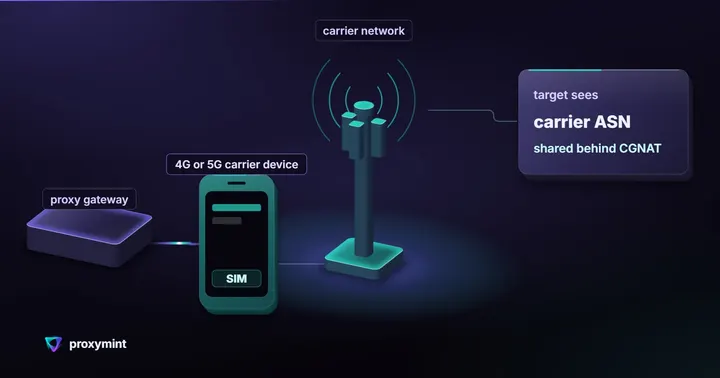 Guides
What are mobile proxies? Carrier IPs, CGNAT and rotation
What are mobile proxies? Carrier IPs behind CGNAT, how rotation works, when they are worth it, when they are not, detection limits and per-GB billing.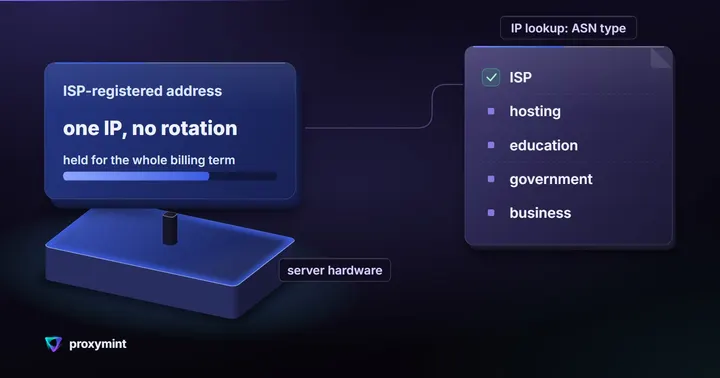 Guides
What are ISP proxies? How they differ from residential
ISP proxies are ISP-registered IPs on servers, held for the term. How they differ from residential, pros and cons, billing, and a week-long test to verify one.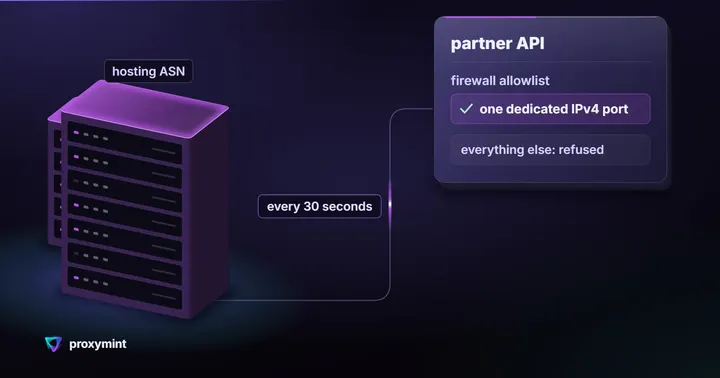 Guides
What are datacenter proxies? Uses, limits and pricing
Datacenter proxies use IPs owned by hosting companies. What they are used for, why strict sites block them, how to test a target, and IPv4 port pricing.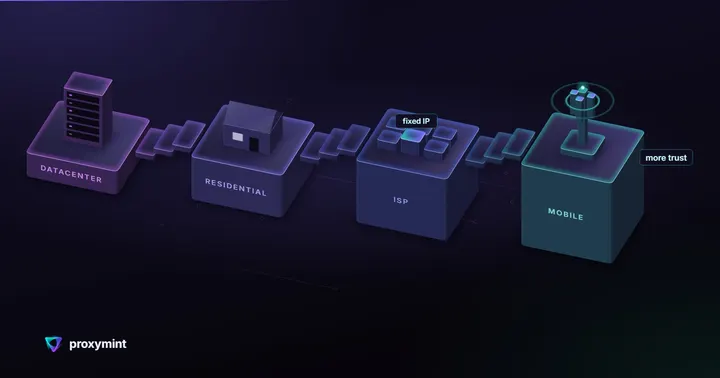 Guides
Types of proxies: datacenter, residential, ISP and mobile compared
Types of proxies sorted by what the target sees: datacenter, residential, ISP and mobile, then by protocol, anonymity, rotation, access and billing.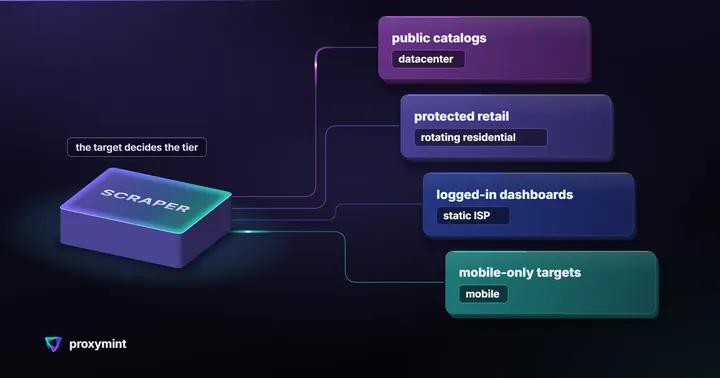 Guides
Best proxies for web scraping: match the proxy to the job
The best proxies for web scraping depend on the target. Datacenter, residential, ISP and mobile compared by job, with billing models and a test to run first.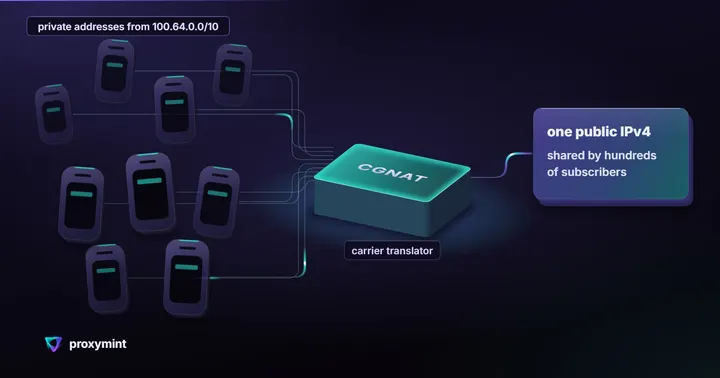 Guides
CGNAT explained for proxy buyers: why shared carrier IPs are the point
A CGNAT proxy exits from a carrier IPv4 shared by hundreds of subscribers. How the sharing works, how to check for it, and why it makes blocks costly.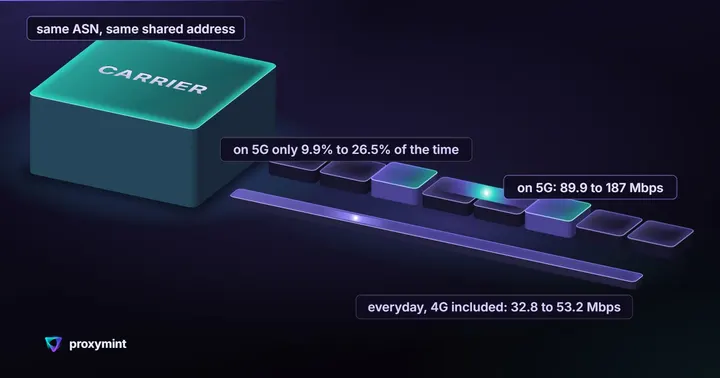 Comparisons
4G vs 5G proxies: what the generation actually changes
4G proxies and 5G proxies clear the same trust checks. The generation changes throughput and latency; the carrier address sets the trust score.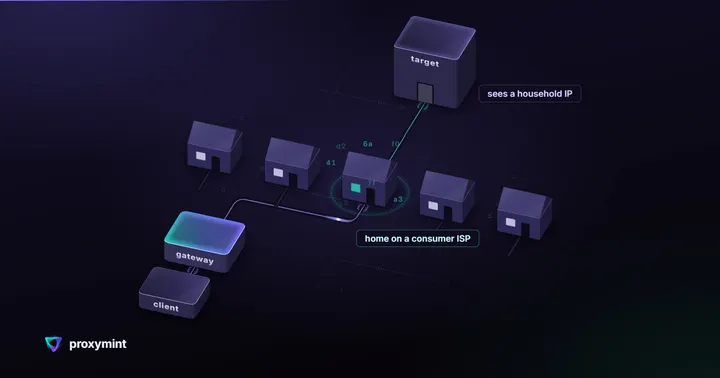 Guides
What is a residential proxy? How it works and when you need one
A residential proxy sends traffic out through a home ISP connection. How it works, where the IPs come from, whether it is legal, and what it costs per GB.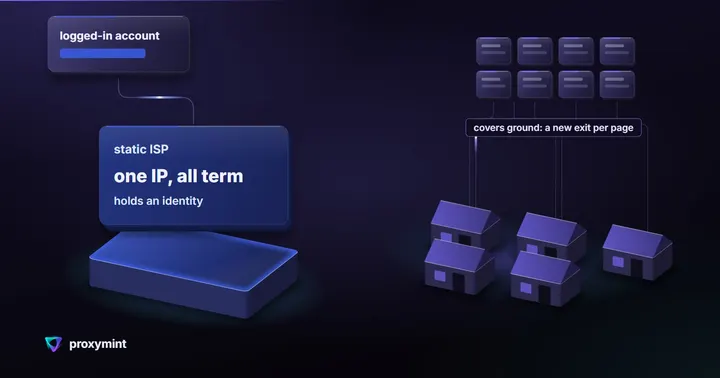 Comparisons
ISP proxies vs rotating residential: which one the job actually needs
ISP vs residential proxies: one holds a static identity, the other spreads across a pool. Speed, location, detection and per-IP vs per-GB cost compared.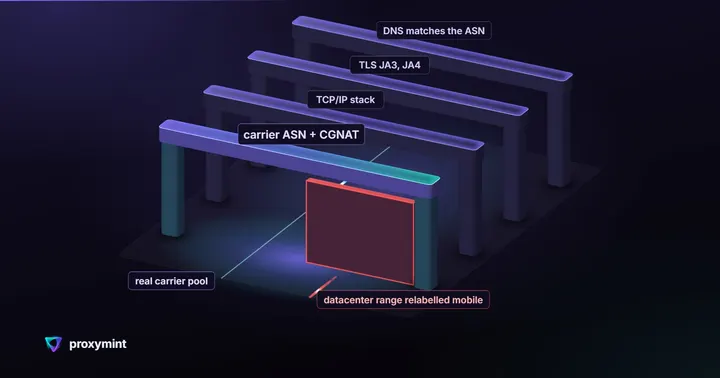 Guides
Mobile proxies in 2026: what platforms actually check
Mobile proxy detection runs in layers: carrier ASN, CGNAT, TCP stack, TLS and behaviour. What a real carrier pool changes, what the client owns, how to check.No article matches that search. Try a proxy type or an error code.
Browse by proxy type
Mobile proxiesTraffic exits through mobile carrier networks, on addresses MaxMind classifies as cellular.ISP proxiesAn ISP proxy is one ISP-registered address, assigned to your order for the whole billing term, on the stability of a server.Residential proxiesRequests leave through real home connections on consumer ISPs, across a pool large enough to rotate on every request.Datacenter proxiesThe fastest tier, built for volume.